A schemaless endpoint feels like freedom until the first automated system tries to use it.
In the early days of a project, it’s wonderfully easy: Point a form at a URL. Accept whatever payload arrives. Store it as a JSON blob. Decide what it means later. But this is how technical debt begins—as a “black hole” endpoint that relies on the frontend to be the only source of truth.
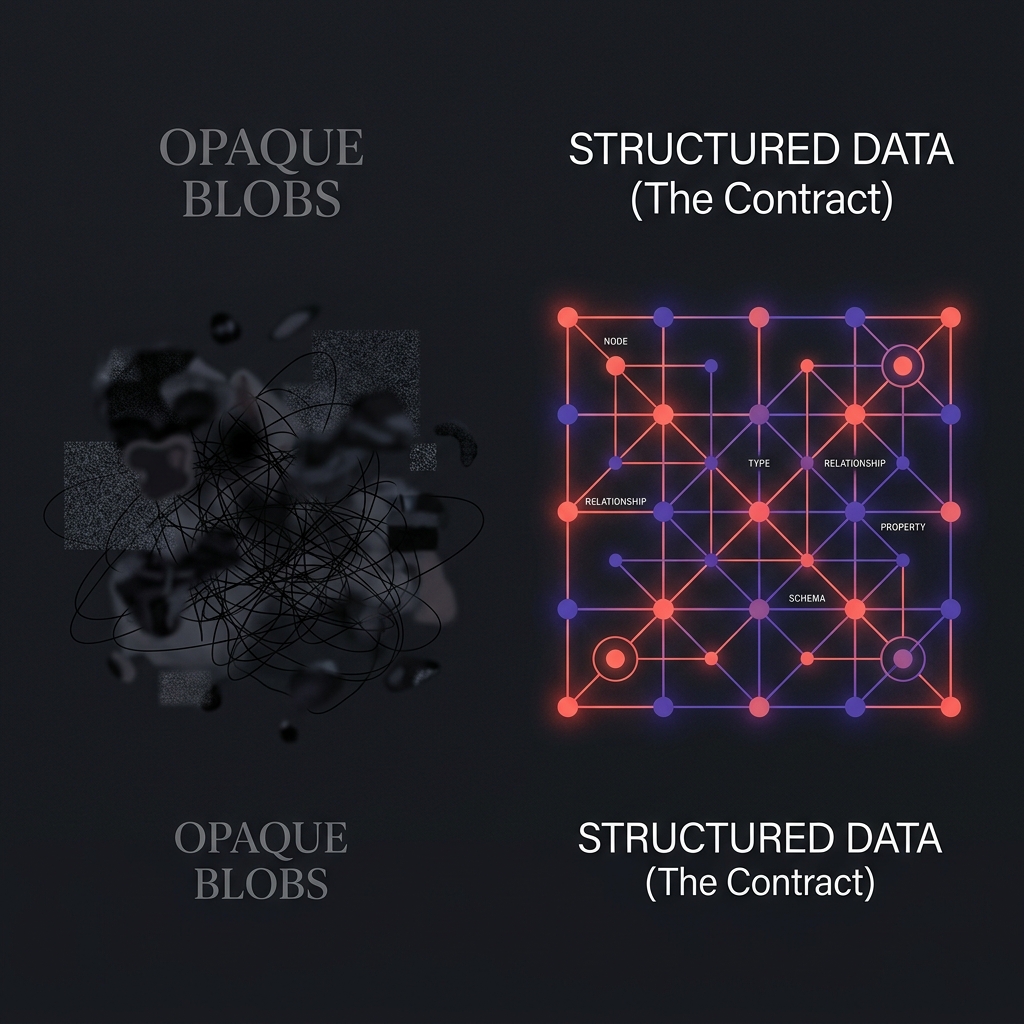
The Schemaless Debt
Consider a typical startup, FastFlow. They used a generic form-to-JSON service for their “Contact Sales” form.
- The Success: They launched in an hour. Submissions arrived as blobs.
-
The Friction: They hired an AI agent to summarize their leads. The agent struggled because half the keys were misspelled (
emialvsemail), and some users left thebudgetfield empty because the backend didn’t enforce it. -
The Collapse: They tried to route “Enterprise” leads to a specific Slack channel. But because the
company_sizefield wasn’t a validated enum, the logic failed on strings like “100+”, “100-500”, and “Large”.
FastFlow saved an hour on Day 1 but spent a week on Day 100 cleaning up bad data.
The Frontend Cannot Be the Contract
When structure lives only in the frontend, the endpoint is blind. The UI might imply that a message is required, but the backend receives a payload and simply hopes the client behaved.
Trust is not a contract. It is fine for a weekend project, but it is dangerous for a production system where multiple clients (web, mobile, agents) must interact with the same data.
Structured forms move the boundary to the edge. Bad data never lands. Good data arrives with a guaranteed shape that downstream systems—and AI agents—can rely on.
Why Agents Demand Structure
Humans can compensate for missing structure. Agents should not have to.
A human can look at a label and infer intent. An agent needs a machine-readable description. It needs to know field names, types, required rules, and authentication requirements. If that information exists only in a rendered page, the agent has to scrape, guess, and recover from errors.
In Postbox, the endpoint is Self-Documenting. An agent can GET the URL, learn the schema, and POST a valid payload. The contract is explicit, reducing the “hallucination surface” of your AI integrations.
Intelligence Requires Leverage
AI features like spam detection, translation, and smart replies are only as useful as the context they receive.
- Spam Detection: Needs to know which field contains the intent of the message.
- Smart Replies: Needs to know which field contains the user’s question and which holds the email address.
A schemaless blob forces the AI to guess. A structured submission gives the system a map.
Versioning: The Cure for Rigidity
A common objection to schemas is that they feel rigid. But the real problem isn’t structure; it’s mutable structure.
Postbox solves this through Automatic Versioning. When you update a schema, we generate a new endpoint URL. Old URLs keep working against the old contract. New clients adopt the new contract when ready. You evolve without breaking what already exists.
Structure is not bureaucracy. It is leverage.
Start with Postbox free and build on a foundation of structured contracts. 5,000 lifetime submissions and full schema-first validation included. No credit card required.
For the deeper product thesis, read A Form Is a Contract, Not a UI and the Postbox features overview.